
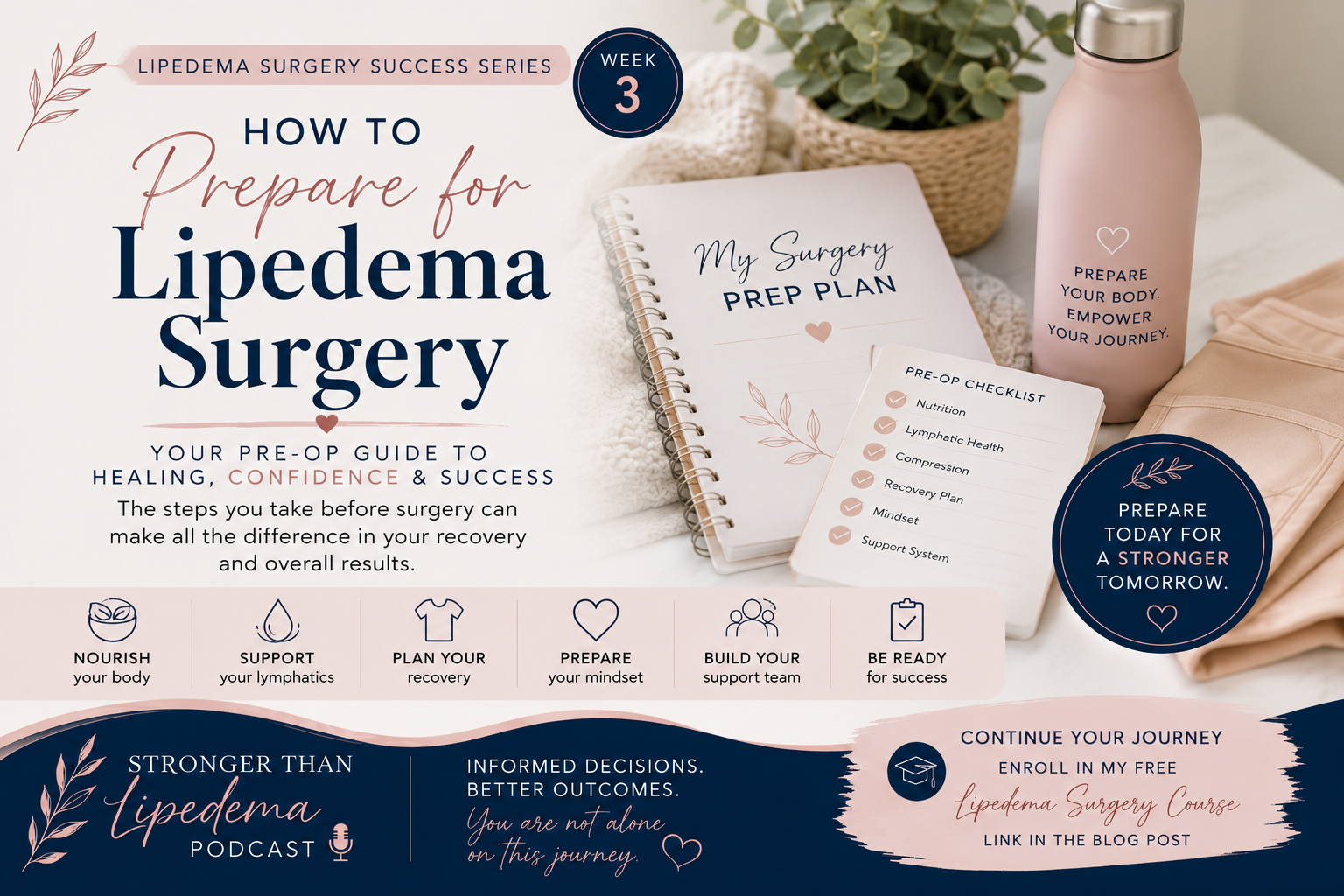
Part 3 of the Lipedema Surgery Success Series
You’ve made the decision to pursue lipedema surgery. You’ve researched surgeons, scheduled consultations, and perhaps even selected your surgery date. Excitement is often mixed with nervousness, and one question usually rises to the top:
“What should I be doing to prepare?”
The truth is, preparing for lipedema surgery involves much more than packing a suitcase and arranging travel plans. The steps you take in the weeks leading up to surgery can significantly impact your recovery and overall surgical experience.
Think of surgery as a marathon, not a sprint. The better prepared your body and mind are before surgery, the more successful your recovery is likely to be.
Start Preparing Early
Many women spend months researching surgeons but only begin thinking about preparation a few days before surgery. Ideally, preparation should begin several weeks, or even months, in advance.
Use this time to optimize your overall health and create a recovery plan that sets you up for success.
Focus on Nutrition
Your body will be working hard to heal after surgery, which means proper nutrition is essential.
Before surgery, focus on:
- Prioritizing protein at every meal
- Staying well hydrated
- Eating anti-inflammatory whole foods
- Reducing processed foods and added sugars
- Incorporating fruits and vegetables rich in vitamins and antioxidants
- Avoiding crash diets or restrictive eating patterns
Protein is particularly important for tissue repair and healing. If you’ve struggled to meet your protein goals, now is the time to develop consistent habits.
Remember, surgery is not a weight loss procedure. Nourishing your body properly before surgery will support better healing afterward.
Optimize Your Lymphatic Health
Supporting your lymphatic system before surgery can help prepare your body for the recovery process.
Consider discussing the following with your healthcare team:
- Manual Lymphatic Drainage (MLD)
- Compression garments
- Regular movement and walking
- Staying hydrated
- Managing inflammation
- Prioritizing restorative sleep
The healthier and more supported your lymphatic system is before surgery, the better prepared it will be during recovery.
Build Your Recovery Team
Many women focus solely on the surgeon and forget about the people who will support them afterward.
Ask yourself:
- Who will travel with me?
- Who will help me during the first few days after surgery?
- Who can assist with meals or household responsibilities?
- Do I need childcare arrangements?
- Will I require transportation to appointments?
Recovery can be physically and emotionally demanding. Having support in place before surgery can significantly reduce stress.
Understand Your Compression Needs
Compression is an important part of lipedema surgery recovery.
Before surgery, ask your surgeon:
- What garments are required?
- When should I order them?
- How long will I need to wear them?
- Will I need multiple garments?
- What should I expect as swelling changes?
Having everything ready before surgery means one less thing to worry about during recovery.
Prepare Your Home
One of the best gifts you can give yourself is creating a recovery-friendly environment before you leave for surgery.
Consider preparing:
- Easy-to-prepare meals or meal delivery
- Extra pillows and blankets
- Water bottles and electrolyte drinks
- Comfortable loose-fitting clothing
- Medications and supplies recommended by your surgeon
- Charging cords and entertainment options
- Compression garments and post-operative supplies
Small preparations can make a big difference during those first few days at home.
Plan Financially
Lipedema surgery often involves more expenses than patients initially anticipate.
Be sure to consider:
- Surgical fees
- Travel expenses
- Lodging
- Compression garments
- Time off work
- Manual Lymphatic Drainage appointments
- Recovery supplies
- Follow-up appointments
Creating a financial plan beforehand can help eliminate unnecessary stress during recovery.
Prepare Emotionally
This may be one of the most overlooked aspects of preparing for surgery.
It’s completely normal to experience:
- Excitement
- Anxiety
- Fear
- Uncertainty
- Second thoughts
Remember that lipedema surgery is a major medical procedure. Give yourself permission to feel whatever emotions arise.
Some helpful ways to prepare emotionally include:
- Journaling
- Practicing mindfulness or prayer
- Talking with former patients
- Building a support network
- Setting realistic expectations
You don’t have to feel fearless to move forward, you simply need to feel informed and supported.
Set Realistic Expectations
Recovery isn’t linear.
Some women feel wonderful after surgery, while others experience:
- Significant swelling
- Bruising
- Fatigue
- Emotional ups and downs
- Temporary limitations in mobility
Healing takes time.
It’s important to remember that the final results of lipedema surgery are not visible immediately. Your body needs time to heal and adapt.
Patience is one of the most important things you can pack for your surgery journey.
Questions to Ask Before Surgery
Consider asking your surgeon:
- What medications or supplements should I stop taking?
- What should I bring on surgery day?
- What restrictions will I have after surgery?
- When can I return to work?
- When can I exercise again?
- What complications should I watch for?
- What follow-up appointments are required?
- Who should I contact if I have concerns?
The more questions you ask before surgery, the more confident you’ll feel afterward.
Your Pre-Op Checklist
Before surgery, make sure you have:
- Scheduled time off work.
- Arranged transportation.
- Ordered compression garments.
- Planned meals for recovery.
- Scheduled post-operative MLD appointments if recommended.
- Purchased recovery supplies.
- Packed comfortable clothing.
- Confirmed travel arrangements.
- Completed pre-operative testing.
- Created a support plan.
Final Thoughts
Preparing for lipedema surgery isn’t just about the procedure itself, it’s about preparing your body, your mind, and your environment for a successful recovery.
Give yourself permission to slow down and prepare intentionally. The habits you establish before surgery will continue to support your healing long after you’ve left the operating room.
You deserve to feel informed, prepared, and confident as you take this next step in your journey.
Continue Your Surgery Journey with My FREE Lipedema Surgery Course
If you’re preparing for lipedema surgery and want to feel more confident every step of the way, I invite you to enroll in my FREE Lipedema Surgery Course.
Inside the course, you’ll learn:
- What to know before surgery
- How to prepare physically and emotionally
- What to expect on surgery day
- Recovery timelines and healing expectations
- The role of compression, Manual Lymphatic Drainage, nutrition, and movement after surgery
- Tips for achieving the best possible long-term outcomes
My goal is to help you feel empowered and educated before, during, and after surgery.
Enroll in the FREE Lipedema Surgery Course today and continue your surgery journey with confidence.
Supporting Your Wellness,
OX Cindy
Ready to take your journey to the next level? Join the private Facebook community for exclusive support, practical tips, and a group of women who truly understand. Let’s empower each other to thrive: click here to join! https://www.facebook.com/groups/7021999704562921/
What my FREE checklist: Top 5 Foods to Avoid for Managing Lipedema! Click there Link: https://withcindyhowell.com/checklist/
Looking for personalized guidance to manage lipedema? Work with me one-on-one to create a tailored plan that fits your unique needs and empowers your health journey. Click here to learn more and get started today! https://l.bttr.to/WaDwK
Free Lipedema Surgery Course:https://l.bttr.to/6cATB
Written by Cindy Howell, RN, CLT
Certified Lymphedema Therapist & Lipedema Support Coach