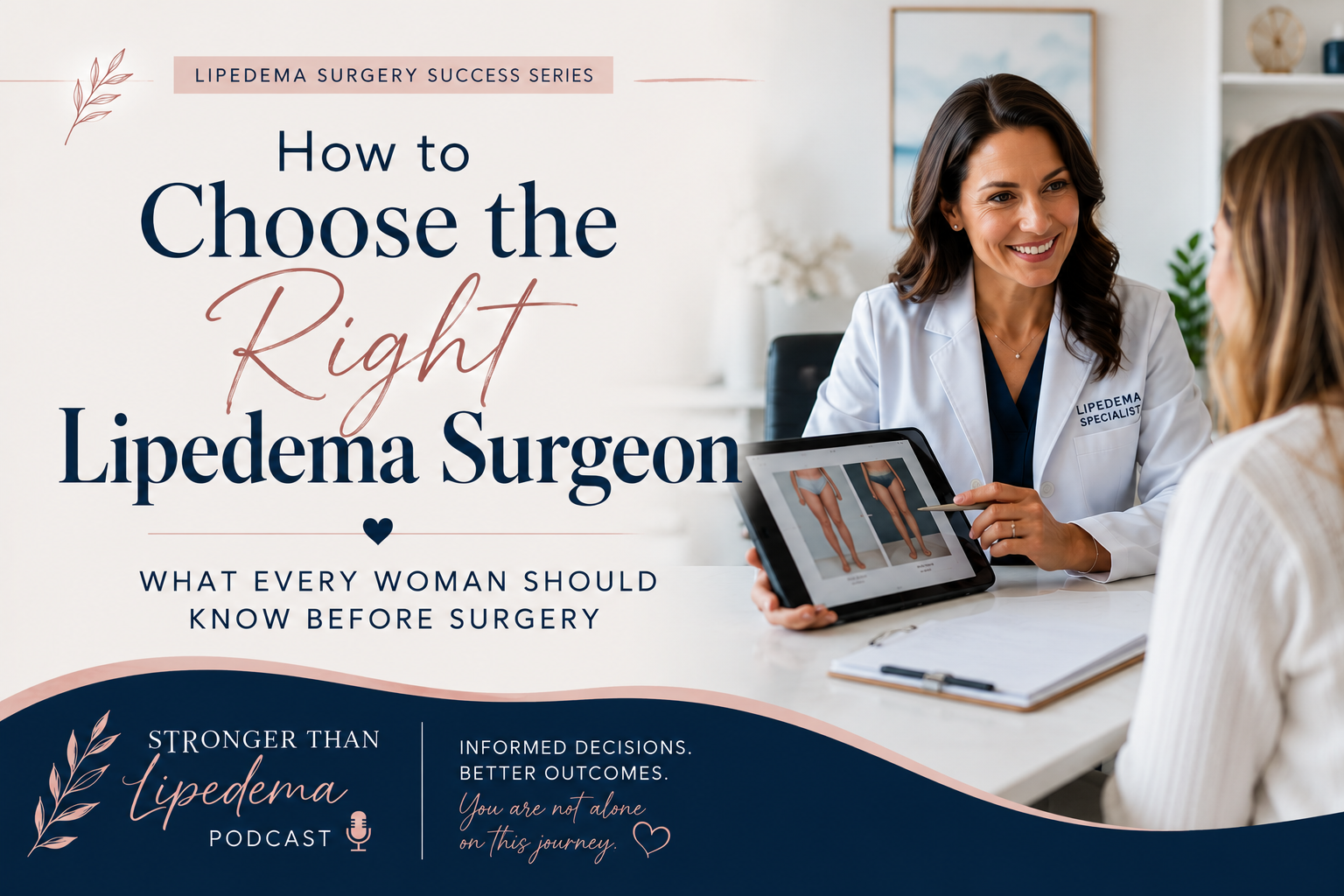
Part 2 of the Lipedema Surgery Success Series
After deciding that lipedema surgery may be the right next step for you, the next question often feels even more overwhelming:
“How do I choose the right surgeon?”
With more providers offering lipedema surgery than ever before, it’s easy to become overwhelmed by websites, social media posts, before-and-after photos, and patient recommendations in online support groups.
The truth is, choosing a surgeon is about much more than beautiful results on Instagram.
The right surgeon should not only be highly skilled technically but should also understand lipedema as a chronic disease and provide comprehensive care before, during, and after surgery.
Remember, this is your body, your health, and your future quality of life. You deserve to feel confident in your decision.
There Is No “Best” Surgeon for Everyone
One of the most common questions I hear is:
“Who is the best lipedema surgeon?”
The reality is that there isn’t one surgeon who is the best fit for every patient.
The right surgeon for you depends on several factors, including:
- Your stage of lipedema
- The areas of your body that require treatment
- Your overall health and medical history
- Your budget
- Travel considerations
- Surgical philosophy and techniques
- Your personal goals and expectations
The goal isn’t to find the most popular surgeon, it’s to find the surgeon who is the best fit for your individual needs.
Start with Their Experience
Not every plastic surgeon is experienced in treating lipedema.
When researching surgeons, consider asking:
- How long have you been treating lipedema patients?
- Approximately how many lipedema procedures have you performed?
- Do you exclusively treat lipedema patients or perform other cosmetic procedures as well?
- What type of liposuction technique do you use?
- Are you comfortable treating advanced-stage lipedema?
- How many procedures do you perform each month?
Experience matters.
Lipedema surgery requires a different level of understanding than traditional cosmetic liposuction. A surgeon who understands the complexities of lymphatic health, fibrosis, pain, and disease progression can make a significant difference in both outcomes and recovery.
Verify Their Credentials
Before scheduling surgery, make sure you understand:
- Their medical specialty and board certifications
- Their training and experience with lipedema
- Where they perform surgery
- Whether the surgical facility is accredited
- Their safety protocols
- Emergency procedures and support staff
Don’t feel uncomfortable asking questions. A reputable surgeon will appreciate an informed patient.
Ask About Their Surgical Philosophy
Every surgeon approaches lipedema surgery differently.
Some prefer:
- Awake procedures
- IV sedation
- General anesthesia
- Treating multiple areas at once
- Staging procedures over time
- More conservative tissue removal
- More aggressive treatment plans
There is rarely only one “right” approach.
Ask your surgeon:
- How many surgeries do you typically recommend?
- What is your philosophy regarding tissue removal?
- How do you determine how much to remove safely?
- What are your goals for patient outcomes?
Understanding their philosophy can help determine whether it aligns with your expectations and comfort level.
Don’t Let Before-and-After Photos Make the Decision
Before-and-after photos can be helpful, but they don’t tell the whole story.
Photos don’t show:
- Recovery experiences
- Complications
- Patient satisfaction
- Functional improvements
- Long-term outcomes
- Quality of care
Ask yourself:
- Did patients experience less pain?
- Has their mobility improved?
- How was their recovery?
- Were they supported after surgery?
The most successful outcomes are measured by improved quality of life, not simply aesthetics.
Understand the Recovery Process
Your relationship with your surgeon doesn’t end when surgery is complete.
Ask questions about recovery, including:
- How long should I expect to be swollen?
- When can I return to work?
- What is your post-operative protocol?
- Will I need Manual Lymphatic Drainage?
- How long will I wear compression garments?
- What complications should I watch for?
- How do you handle patient concerns after surgery?
Knowing what recovery looks like before surgery can help set realistic expectations and reduce anxiety.
Ask About Complications
Every surgery carries risk.
Don’t hesitate to ask:
- What complications do you commonly see?
- How often do complications occur?
- What happens if I develop a complication?
- Who do I contact after hours?
- What type of follow-up care is provided?
If a provider dismisses your questions or guarantees perfect outcomes, consider that a red flag.
The best surgeons openly discuss both benefits and risks.
Speak with Former Patients
Whenever possible, speak with women who have undergone surgery with that provider.
Ask about:
- Their consultation experience
- Communication with the office
- Recovery support
- Surgical outcomes
- Whether they would choose the same surgeon again
Online support groups can be incredibly helpful for gathering patient experiences, but remember that everyone’s journey is different.
Questions Every Lipedema Patient Should Ask
Bring this list with you to every consultation:
- How many lipedema surgeries have you performed?
- What anesthesia options do you offer?
- How many procedures do you recommend for me?
- What are the risks and complications?
- What does recovery typically look like?
- What compression garments do you recommend?
- Will I need Manual Lymphatic Drainage after surgery?
- What type of follow-up care is included?
- What happens if I experience a complication?
- What can I realistically expect from my results?
Never feel rushed into making a decision.
Red Flags to Watch For
Pay attention if:
- You feel pressured to book immediately.
- Your questions are dismissed or minimized.
- Risks are not openly discussed.
- You are promised unrealistic results.
- There is little discussion about recovery or long-term management.
- Communication from the office is poor.
You should feel educated, respected, and supported throughout the entire process.
Surgery Is Only One Part of Your Lipedema Journey
It’s easy to focus entirely on finding the right surgeon, but it’s equally important to prepare yourself for surgery and recovery.
Successful outcomes involve:
- Education
- Conservative treatment when appropriate
- Nutrition
- Compression
- Lymphatic support
- Realistic expectations
- Long-term lifestyle habits
The best surgeon in the world cannot replace the importance of being an informed and engaged participant in your own care.
Final Thoughts
Choosing a lipedema surgeon is one of the most important decisions you’ll make throughout your treatment journey. Take your time. Ask questions. Do your research.
You deserve a provider who not only has the surgical skill to perform the procedure safely but who also understands the unique challenges of living with lipedema.
Trust yourself throughout the process. If something doesn’t feel right, it’s okay to seek a second or even third opinion.
The right surgeon will never make you feel rushed or pressured. Instead, they will help you feel educated, empowered, and confident in your decision.
Continue Your Surgery Journey with My FREE Lipedema Surgery Course
If you’re considering lipedema surgery and want to feel more prepared before scheduling consultations, my FREE Lipedema Surgery Course was created just for you.
Inside the course, you’ll learn:
- What you need to know before surgery
- How to prepare physically and emotionally
- Questions to ask during consultations
- What to expect during recovery
- The role of compression, Manual Lymphatic Drainage, and nutrition in healing
- Tips for achieving the best possible long-term outcomes
The more informed you are before surgery, the more confident you’ll feel in the decisions you make.
Enroll in the FREE Lipedema Surgery Course today and take the next step toward becoming an empowered advocate for your health. https://l.bttr.to/6cATB
Supporting Your Wellness,
OX Cindy
Ready to take your journey to the next level? Join the private Facebook community for exclusive support, practical tips, and a group of women who truly understand. Let’s empower each other to thrive: click here to join! https://www.facebook.com/groups/7021999704562921/
What my FREE checklist: Top 5 Foods to Avoid for Managing Lipedema! Click there Link: https://withcindyhowell.com/checklist/
Looking for personalized guidance to manage lipedema? Work with me one-on-one to create a tailored plan that fits your unique needs and empowers your health journey. Click here to learn more and get started today! https://l.bttr.to/WaDwK
Free Lipedema Surgery Course:https://l.bttr.to/6cATB
Written by Cindy Howell, RN, CLT
Certified Lymphedema Therapist & Lipedema Support Coach