
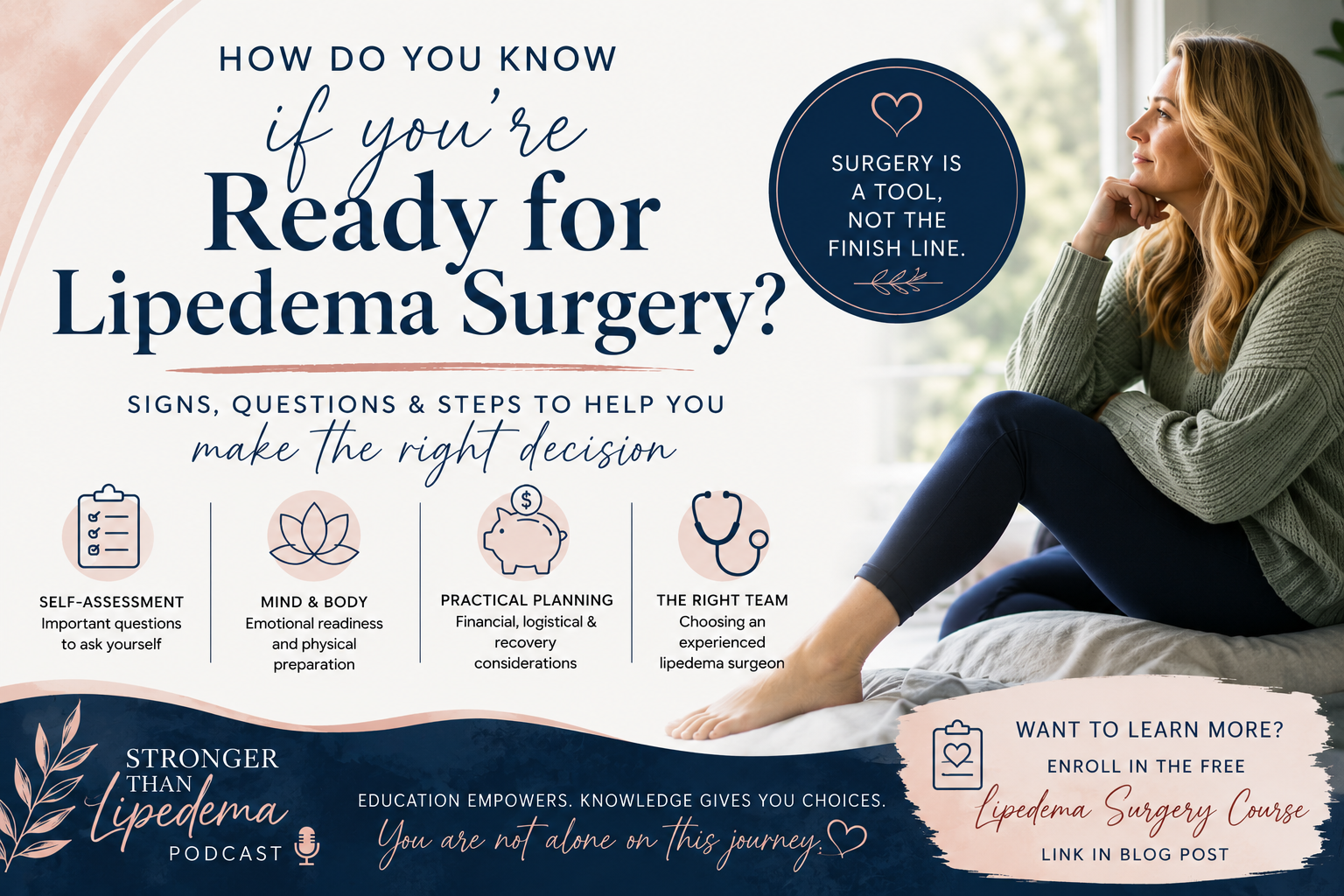
Part 1 of the Lipedema Surgery Success Series
Making the decision to pursue lipedema surgery can feel overwhelming. For many women, it’s a decision years or even decades in the making. You’ve likely tried countless diets, exercise programs, compression garments, and conservative treatments, only to continue struggling with pain, swelling, mobility challenges, and the emotional burden that often accompanies lipedema.
If you’ve found yourself wondering, “Am I ready for surgery?” you’re not alone.
The truth is, there isn’t a perfect checklist that tells you exactly when it’s time. Every woman’s journey with lipedema is unique. However, there are important questions you can ask yourself that may help you determine whether you’re ready to take the next step.
First, Understand What Surgery Can and Cannot Do
Lipedema reduction surgery is currently the only treatment that can remove abnormal lipedema fat tissue. For many women, surgery can significantly improve pain, mobility, quality of life, and daily function.
However, surgery is not a cure.
Lipedema is a lifelong condition that requires ongoing management. Even after surgery, healthy lifestyle habits, compression (when appropriate), movement, and lymphatic support remain essential parts of long-term care.
The goal of surgery isn’t perfection it’s improving your quality of life.
Ask Yourself These Questions
1. Have I Been Properly Diagnosed?
Many women spend years being told they simply need to lose weight.
A proper evaluation from a healthcare provider experienced in lipedema is an important first step. Understanding your stage, symptoms, and overall health helps determine whether surgery is appropriate and when it may be beneficial.
2. Have I Tried Conservative Treatment?
Most surgeons recommend conservative management before surgery.
This may include:
- Manual Lymphatic Drainage (MLD)
- Compression garments
- Anti-inflammatory nutrition
- Regular movement and exercise
- Weight management when appropriate
- Pneumatic compression therapy
- Stress management and quality sleep
Conservative care often improves symptoms and helps prepare your body for surgery, even if you ultimately decide to move forward with an operation.
3. Are My Symptoms Affecting My Daily Life?
Consider how lipedema impacts your everyday activities.
Ask yourself:
- Is pain limiting my ability to work or exercise?
- Am I avoiding activities I once enjoyed?
- Is walking becoming more difficult?
- Am I struggling with increasing heaviness or swelling?
- Is my mobility declining?
- Is lipedema affecting my emotional well-being?
When symptoms begin interfering with your quality of life, surgery may become a reasonable option to discuss with an experienced surgeon.
4. Am I Emotionally Ready?
This question is often overlooked.
Surgery is both a physical and emotional journey.
Recovery takes patience. Swelling can last for months. Results develop gradually. Some women experience emotional highs and lows throughout recovery.
Having realistic expectations and a strong support system can make a tremendous difference in your experience.
5. Am I Financially Prepared?
Unfortunately, insurance coverage for lipedema surgery remains inconsistent.
Before scheduling surgery, consider:
- Surgical costs
- Travel expenses
- Lodging
- Time away from work
- Compression garments
- Post-operative supplies
- Manual lymphatic drainage treatments
- Caregiver support during recovery
Planning ahead can reduce unnecessary stress and help you focus on healing.
6. Have I Chosen the Right Surgeon?
Not all surgeons have the same experience treating lipedema.
Take time to research:
- Training and credentials
- Years of experience treating lipedema
- Surgical volume
- Facility accreditation
- Before-and-after results
- Patient reviews
- Recovery protocols
- Follow-up care
Don’t be afraid to ask questions. An experienced surgeon should welcome them.
7. Have I Prepared My Body?
The healthiest recovery starts before surgery.
Preparing your body may include:
- Optimizing nutrition
- Staying hydrated
- Improving protein intake
- Addressing vitamin deficiencies
- Continuing movement within your comfort level
- Wearing compression if recommended
- Receiving pre-operative Manual Lymphatic Drainage
- Managing stress
- Prioritizing quality sleep
Think of surgery as one chapter in your treatment, not the entire story.
Surgery Is a Tool, Not the Finish Line
One of the biggest misconceptions about lipedema surgery is that it “fixes everything.”
While surgery can dramatically improve symptoms, long-term success depends on continued self-care.
Many women continue to benefit from:
- Manual Lymphatic Drainage
- Compression therapy
- Anti-inflammatory nutrition
- Regular movement
- Strength training as appropriate
- Stress management
- Follow-up medical care
These habits support your lymphatic system and help protect the improvements you’ve worked so hard to achieve.
There Is No “Perfect Time”
Some women choose surgery soon after diagnosis.
Others spend years managing their symptoms conservatively.
Neither path is wrong.
The right time is when you’ve gathered the information you need, understand the benefits and limitations, and feel confident that the decision aligns with your personal health goals.
Remember, surgery is not a measure of how “serious” your lipedema is. It’s simply one treatment option among many.
Final Thoughts
Whether you’re just beginning to explore surgery or already scheduling consultations, know that you don’t have to navigate this journey alone.
Education is one of the most powerful tools you have.
The more informed you are, the more confident you’ll feel in making decisions that are right for your body and your future.
At the end of the day, the goal isn’t simply having surgery, it’s living a fuller, healthier life with less pain, greater mobility, and renewed confidence.
Ready to Learn More?
If you’re newly diagnosed with lipedema or trying to understand your treatment options, I’d love to help you build a strong foundation.
Enroll in my FREE Surgery Success Roadmap for Women with Lipedema: What to Know Before, During, and After Lipedema Surgery where you’ll learn:
- How to know if surgery is the right choice for you
- How to prepare physically, mentally, and emotionally before surgery
- What to expect on surgery day
- Recovery timelines and realistic healing expectations
- The importance of Manual Lymphatic Drainage (MLD), compression, movement, and nutrition after surgery
- Common mistakes that can delay recovery—and how to avoid them
- How to set yourself up for the best possible long-term outcome
This free course was created to help you better understand your condition so you can make informed decisions, whether surgery is in your future or not.
Your journey starts with education, and I’d be honored to walk alongside you.
Supporting Your Wellness,
OX Cindy
Ready to take your journey to the next level? Join the private Facebook community for exclusive support, practical tips, and a group of women who truly understand. Let’s empower each other to thrive: click here to join! https://www.facebook.com/groups/7021999704562921/
What my FREE checklist: Top 5 Foods to Avoid for Managing Lipedema! Click there Link: https://withcindyhowell.com/checklist/
Looking for personalized guidance to manage lipedema? Work with me one-on-one to create a tailored plan that fits your unique needs and empowers your health journey. Click here to learn more and get started today! https://l.bttr.to/WaDwK
Free Lipedema Surgery Course:https://l.bttr.to/6cATB
Written by Cindy Howell, RN, CLT
Certified Lymphedema Therapist & Lipedema Support Coach